
EMBARRASSMENT: A TRAINING TOOL IN NIGERIA
You're gonna learn the hard way...

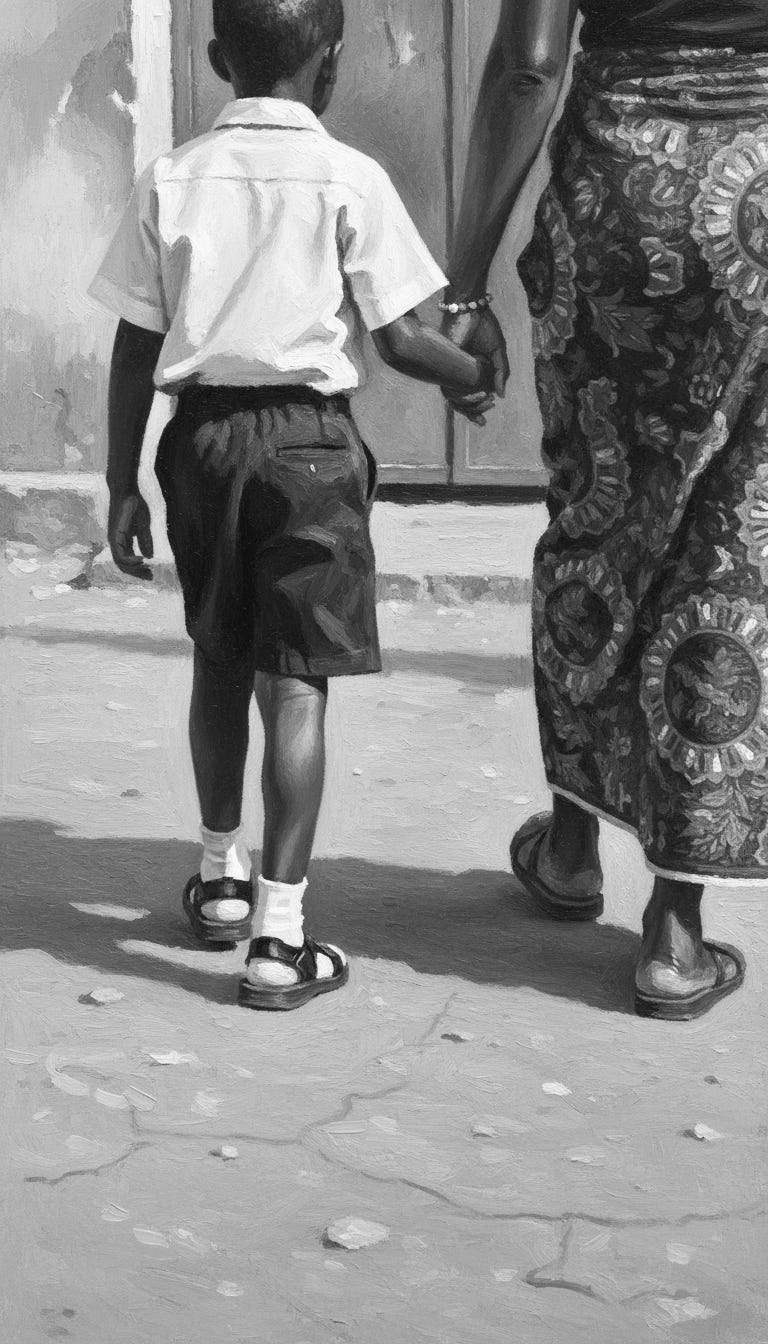
"Train a child in the way he should go..."
My thesis today, though, is titled Embarrassment: A Training Tool In Nigeria
Some people say self-consciousness comes from acquired shame, others say it's from nature. I think it's either or both.
When I was in Primary 3, I had a classmate, Clinton. Clinton was a funny kid who loved to draw, and actually knew how to draw. Unfortunately, he was a dull student, so when the midterms came, he was among the last three.
The next week was Open Day, and like most parents, his father came as well. Now, at first, the man was not angry — more like worried. So he asked our teacher why Clinton had performed so poorly.
Miss Lillian told him that his son was always drawing in class while his mates were learning, and that was when he got mad. Livid.
He gave Clinton three slaps. The slaps were like the thunder that strikes just before the rain actually starts — they were that loud!
Clinton looked around in embarrassment, and we all averted our gaze. Now this particular story only serves as a control for my thesis.
Honestly, I don't think Clinton's father planned to embarrass his son. His rage got the better of him, and Clinton just got embarrassed in the process. Keep that nuance in mind — it's important.
Now, let's talk about my mum. For some reason, it seems like most of my terrible days happened in her car. Almost like the devil purposely trapping me in a moving prison. It was worse when I sat in the front.
She'd shout. She'd scream. She'd shove. She'd slap. Sometimes, she'd even cry. And on the days she felt those weren't enough, she'd park the car and pull me out. The panicked whispers of “please” only made her pull harder.
Beside her silver Toyota Corolla, she'd singe my face with a few more slaps, smacking away my defending arm. Even though my cheeks throbbed in pain, my eyes would refuse to tear because they were busy looking to see if anyone was seeing us. And because Nigerians are quite the nosy people, we never went unnoticed.
“Madam, leave am naw!”
“Na small pikin!”
“You wan kill am?”
Eventually, a nice woman, probably in her 40’s or 50’s, would pull me away. Tucked safely in the stranger's embrace, I'd finally cry. Not because of the assault, but the sight of the small crowd.
She'd finally made a scene…
Or maybe I could talk about how Fortune stole at home over the weekend, and his mother waited two whole days for Monday, so she'd report to the principal and instruct for Fortune to be flogged during the assembly.
She could have easily done that in the privacy of her home, even more brutally than Principal Akin would ever. But what good is discipline without witnesses in a Nigerian home?
So basically, the humiliation is the main tool — not the cane.
But why humiliate someone you claim to love, even if the motive is right? Contrary to public opinion, I don't think the end justifies the means, I think the means is just as important as the end.
It's almost similar — almost — to the way that one gender “intimidates” their partners into submission, but that is tale for another day.
Is this a campaign for gentle parenting? Unfortunately, no. I've seen those videos, and I don't think I really like them.
So, no, I'm not saying gentle parenting, I'm saying KIND parenting instead.
You honestly do not want to raise an individual with low self-esteem who'd turn out at best, a pushover — and at worst, a narcissist.
Chibuzo doesn’t just tell stories he opens a wound with grace. This piece is not a condemnation, but a reckoning with the ways love and violence have been braided into the fabric of discipline. The slaps, the stares, the crowd these aren’t just memories; they’re echoes of a childhood spent navigating shame in public spaces. What makes this reflection so deeply human is its refusal to simplify. There’s no easy villain here just parents overwhelmed, children absorbing the weight of their parents’ fear, pride, and pain. And yet, from that ache, Chibuzo offers something rare: not a call for perfection, but for kindness. Not silence, but dignity. Not control, but care.